
Inheritance and Succession Laws for NRIs
Inheritance and Succession Laws for NRIs
|
📢 Inheritance and Succession Laws for NRIs
Understanding inheritance and succession laws is crucial for Non-Resident Indians (NRIs) to manage their assets and ensure smooth transfer to their heirs. Here's a concise guide to these laws for NRIs, including key aspects and legal provisions.
Key Aspects of Inheritance for NRIs
-
Inheritance of Property
- Eligibility: NRIs can inherit both movable and immovable property in India, including residential and commercial properties, agricultural land, plantations, and farmhouses.
- Legal Framework: The inheritance laws are governed by the personal laws of the deceased (Hindu, Muslim, Christian, etc.). In the absence of a will, the respective succession laws apply.
-
Drafting a Will
- Importance: A will helps avoid disputes and ensures property is distributed as per the individual's wishes.
- Registration: Though not mandatory, registering a will adds legal validity and helps in avoiding potential disputes.
Succession Laws Based on Religion
-
Hindu Succession Act, 1956
- Applicability: Governs Hindus, Buddhists, Jains, and Sikhs.
- Class I Heirs: Include spouse, children, and mother. They have equal rights in the property.
-
Indian Succession Act, 1925 (Christians and Parsis)
- Christians: Spouse and children share the property, with the spouse receiving one-third and the children two-thirds.
- Parsis: Property is divided equally among the spouse, children, and parents of the deceased.
-
Muslim Personal Law (Sharia Law)
- Applicability: Governed by Sharia law, which prescribes fixed shares for heirs.
- Heirs: Include spouse, children, parents, and siblings. Shares vary based on the presence of these heirs.
Repatriation of Inherited Assets
-
Immovable Property
- Sale Proceeds: NRIs can repatriate the sale proceeds of inherited property up to USD 1 million per financial year, subject to certain conditions and documentation requirements.
-
Movable Assets
- Bank Accounts and Investments: Funds from inherited bank accounts and investments can be repatriated, provided applicable taxes are paid.
Tax Implications
- Estate Duty: India does not levy estate duty on inherited property.
- Capital Gains Tax: If inherited property is sold, capital gains tax applies. The cost of acquisition is considered the property's market value on the date of the original owner's death.
Legal Procedures
-
Probate and Letters of Administration
- Probate: A legal process to validate a will. Required for properties in certain states.
- Letters of Administration: Issued when there is no will, appointing an administrator to manage and distribute the estate.
-
Succession Certificate
- Purpose: Required to transfer movable assets like bank accounts, investments, and shares.
- Issuing Authority: Obtained from the district court where the deceased resided.
Conclusion
NRIs need to be well-versed in inheritance and succession laws to manage their assets in India effectively. Drafting a will, understanding religious succession laws, and knowing the repatriation procedures are crucial steps. Consulting legal experts familiar with NRI issues can provide personalized advice and ensure compliance with Indian laws.
Post Categories
Featured Posts








Latest Posts








Latest Posts
Supreme Court Sides With Madras HC: Person Forwarding Social Media Messages Liable For Contents
The Madras High Court had noted that Shekher was a person of high stature and had many followers. It stated that he should have exercised more caution when forwarding messages. The Supreme Court refused to entertain an appeal challenging Madras ...

Supreme Court Says MP, MLA Can’t Claim Immunity From Prosecution On Charges Of Bribery
The seven-judge Constitution bench of the Supreme Court said it disagreed with the judgment in PV Narasimha and the judgment in PV Narasimha which grants immunity to legislators for allegedly bribery for casting a vote or speech has “wide ramifications ...
Judicial Decorum vs. Legal Expression: Balancing Dissent with Discipline in India’s Courtrooms
🏛️ The Incident That Sparked a National Conversation The recent events in the Supreme Court of India have reignited a fundamental debate — where does a lawyer’s right to expression end and duty to maintain decorum begin? A courtroom is ...
Central Civil Service Rules , Retired Employee Can Be Appointed As Inquiry Authority In Disciplinary Proceedings…
The Supreme Court recently held that the disciplinary authority under the Central Civil Service Rules is empowered to appoint a retired employee as an inquiry authority. It is not necessary that the inquiry officer should be a public servant. The ...
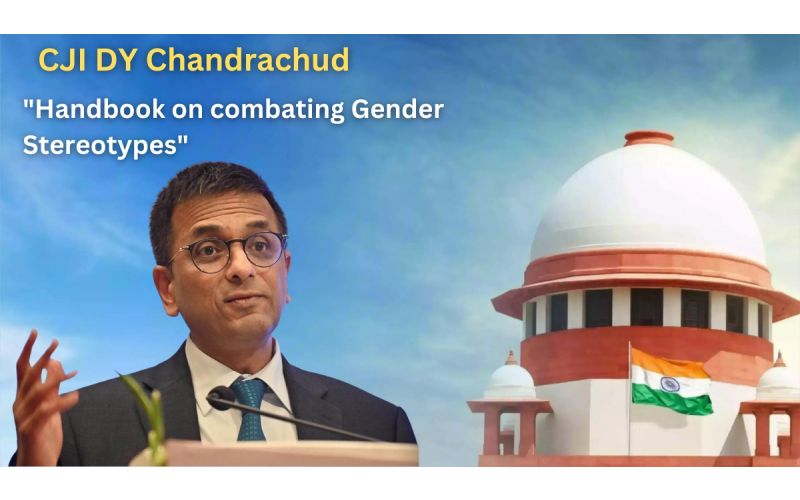
Supreme Court Has Prepared A “Handbook On Combating Gender Stereotypes”
Chief Justice of India DY Chandrachud announced today morning that the Supreme Court has prepared a “Handbook on combating Gender Stereotypes”, in order to identify and remove the use of words and phrases, which are loaded with gender stereotypes, in ...

Uttarakhand Uniform Civil Code Receives President's Approval
In a crucial development, the Uttarakhand Uniform Civil Code (UCC) Bill, 2024 has been granted assent by President of India Droupadi Murmu. It may be recalled that in 2022, a committee was formed by Pushkar Singh Dhami-led Uttarakhand Government to ...

Speak With Our
Get a Appointment