
What Should You Do if a False Criminal Case or FIR is Filed
What Should You Do if a False Criminal Case or FIR is Filed Against You in India?
|
What should you do if you suddenly discover that a criminal case or FIR has been filed against you based on false allegations?
Unfortunately, misuse of criminal law to settle personal disputes, business conflicts, or property disagreements is not uncommon in India. However, the legal system provides powerful remedies to protect innocent individuals from wrongful prosecution.
Understanding False Criminal Cases
A false criminal case typically arises when a person files a fabricated complaint or false allegations before the police with the intent to harass, intimidate, or exert pressure.
Common scenarios include:
-
Business disputes turning into criminal complaints
-
Family or matrimonial conflicts
-
Property disputes among relatives
-
Financial disagreements
-
Professional rivalry
While the police are required to investigate complaints, mere registration of an FIR does not imply guilt.
Legal Protections Available Under Indian Law (BNSS & BNS)
Indian criminal law provides safeguards to ensure that false accusations do not lead to unjust consequences.
Important legal provisions include:
-
Section 528 of the Bharatiya Nagarik Suraksha Sanhita (BNSS) –
Power of High Court to quash FIR or criminal proceedings -
Section 482 BNSS –
Anticipatory Bail to prevent arrest -
Section 268 / 291 BNSS –
Discharge from false charges during trial -
Section 248 of the Bharatiya Nyaya Sanhita (BNS) –
Punishment for false criminal charge
These provisions ensure that misuse of criminal law is addressed appropriately.
Immediate Steps to Take if a False Case Is Filed
If you become aware of a false criminal case, it is important to act calmly but promptly.
1️⃣ Obtain Details of the FIR
The first step is to collect:
-
FIR number
-
Police station details
-
Sections invoked
-
Copy of the FIR
This helps you understand the nature and seriousness of allegations.
2️⃣ Consult a Criminal Lawyer Immediately
Early legal advice is crucial. A criminal lawyer can:
-
Assess the strength of allegations
-
Advise on anticipatory bail
-
Prepare a defence strategy
-
Identify appropriate legal remedies
Timely intervention can prevent unnecessary arrest and harassment.
3️⃣ Apply for Anticipatory Bail
If the allegations involve arrestable offences, you may apply for:
👉 Anticipatory Bail under Section 482 BNSS
This protects you from arrest during investigation and allows you to cooperate with authorities while remaining free.
Courts generally consider:
-
Nature of allegations
-
Evidence against the accused
-
Possibility of misuse of law
-
Risk of tampering with evidence
How to Quash a False FIR Through High Court
One of the most effective remedies is filing a petition before the High Court under:
👉 Section 528 BNSS
High Courts have inherent powers to prevent abuse of legal process and ensure justice.
Grounds for FIR Quashing
Courts may quash an FIR when:
-
Allegations are completely false or fabricated
-
No prima facie offence is made out
-
Dispute is purely civil in nature
-
FIR is filed with malicious intent
-
Continuing proceedings amount to abuse of law
If the court finds merit, it can completely set aside the criminal proceedings.
Judicial Approach of Courts
Indian courts have consistently emphasized that criminal law cannot be used as a tool of harassment.
The Supreme Court and various High Courts have held that where proceedings are malicious, baseless, or legally unsustainable, courts must intervene to protect innocent individuals.
This ensures that the justice system is not misused for personal vendetta.
Risks of Ignoring a False Criminal Case
Ignoring such a case can lead to serious consequences:
-
Non-bailable warrants
-
Arrest during investigation
-
Travel restrictions
-
Prolonged litigation
Therefore, proactive legal action is essential.
Practical Advice for Individuals
If you are falsely implicated:
✔ Preserve all evidence and documents
✔ Avoid direct confrontation with the complainant
✔ Cooperate with lawful investigation
✔ Seek legal advice immediately
✔ Consider legal action against malicious complaints
A strategic legal response can significantly strengthen your defence.
Need Legal Assistance?
If you are facing a false criminal case or malicious FIR, timely legal intervention can safeguard your rights, reputation, and liberty.
📩 Connect with us for case-specific legal advice and representation.
Email: info@eoschambersoflaw.com | contact@eoschambersoflaw.com
Post Categories
Featured Posts








Latest Posts








Latest Posts
Central Civil Service Rules , Retired Employee Can Be Appointed As Inquiry Authority In Disciplinary Proceedings…
The Supreme Court recently held that the disciplinary authority under the Central Civil Service Rules is empowered to appoint a retired employee as an inquiry authority. It is not necessary that the inquiry officer should be a public servant. The ...
Section 313 CrPC | 'Right To Remain Silent Not Be Used Against Accused' : Supreme Court Summarises 12 Principles
Recently, the Supreme Court, in a noteworthy judgment, while acquitting a woman accused of killing her own child and was convicted for murder and sentenced to life imprisonment, also decided the question of what may be required of the convict ...

NEET-PG : Supreme Court Dismisses Plea Challenging Reduction Of NEET-PG 2023 Qualifying Percentile To Zero
The Supreme Court on Monday (September 25) dismissed a petition challenging the decision of the Union Government to reduce the cut-off for post-graduate medical college admissions through NEET-PG 2023 exam as zero percentile. A bench comprising dismissed a PIL filed ...
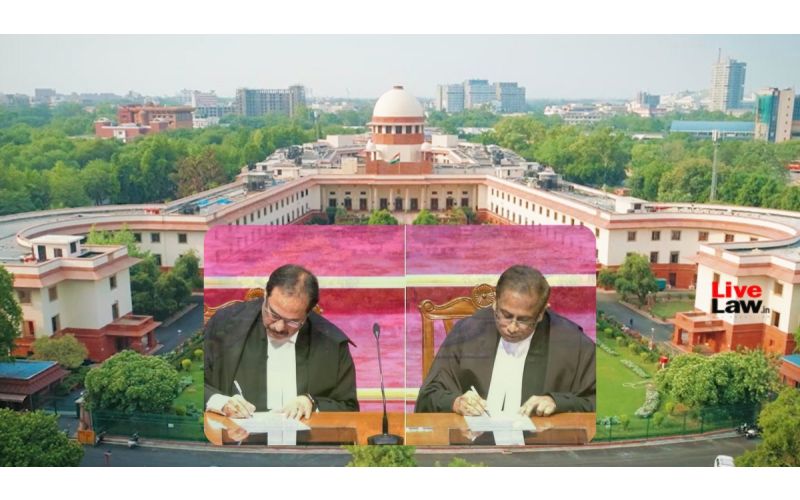
Prashant Mishra, KV Viswanathan Take Oath As Supreme Court Judges
By India, Today News Desk: Justice Prashant Kumar Mishra and senior advocate KV Viswanathan were sworn-in as Supreme Court judges on Friday, a day after the Central government cleared the appointment of the advocates. New Union Law Minister Arjun Meghwal took to ...

Startups and Legal Compliance: A Guide to Navigating Indian Laws
Navigating legal compliance is crucial for startups to establish a strong foundation and ensure sustainable growth. In India, understanding and adhering to applicable laws can be complex but essential. Here’s a concise guide to help startups stay compliant: 1. Incorporation ...
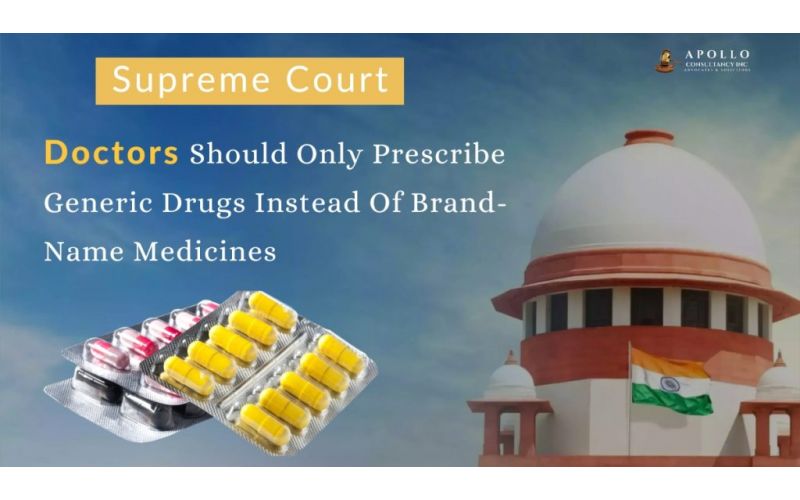
SC Issues Notice On PIL Seeking Action Against Doctors Who Do Not Prescribe Generic Medicines
The plea said that affordability of medicines is a vital factor that contributes to effective healthcare delivery and the realization of the ‘right to health’ The Supreme Court on Friday issued notice on a PIL seeking disciplinary actions against doctors ...

Speak With Our
Get a Appointment