
5 Mistakes People Make While Buying Property in India

5 Mistakes People Make While Buying Property in India
|
Buying property is one of the biggest financial decisions in India.
But are you sure you are not making a mistake that could cost you years of litigation or financial loss?
Many buyers focus only on location and price, while ignoring crucial legal aspects — which later turn into serious disputes, fraud, or blocked investments.
Why Property Disputes Are So Common in India
Real estate transactions in India often involve:
- Multiple ownership claims
- Incomplete documentation
- Builder delays
- Fraudulent sales
A small oversight during purchase can lead to long legal battles and financial stress.
Mistake 1: Not Verifying Property Title Properly
The Problem:
Many buyers rely only on seller statements or broker assurances without verifying the legal title.
⚖️ Risk:
- Property may have multiple owners
- Ongoing disputes or encumbrances
- Illegal or unauthorized ownership
✅ Solution:
- Conduct title verification for at least 15–30 years
- Check ownership chain
- Verify encumbrance certificate
👉 Always take a legal opinion before purchase
Mistake 2: Ignoring Legal Due Diligence
🔍 The Problem:
Skipping proper legal checks to “save time” or “trusting the builder”.
⚖️ Risk:
- Buying disputed or illegal property
- Future litigation
- Financial loss
✅ Solution:
Verify:
✔ Sale deed
✔ Approved building plans
✔ Land use permissions
✔ Local authority approvals
Mistake 3: Not Checking Builder Credentials (For Under-Construction Projects)
🔍 The Problem:
Investing in projects without checking builder history.
⚖️ Risk:
- Project delays
- Possession issues
- Poor construction quality
✅ Solution:
- Check RERA registration
- Review builder track record
- Verify project approvals
👉 RERA compliance is a must for buyer protection
Mistake 4: Improper Agreement Drafting
🔍 The Problem:
Signing agreements without understanding terms.
⚖️ Risk:
- Hidden clauses
- Unfavourable conditions
- Weak legal protection
✅ Solution:
- Get agreement reviewed by a lawyer
- Ensure clear clauses on:
- Possession date
- Payment schedule
- Penalty for delay
Mistake 5: Ignoring Possession & Registration Formalities
🔍 The Problem:
Not completing legal formalities after purchase.
⚖️ Risk:
- Ownership disputes
- Legal complications
- Loss of rights
✅ Solution:
✔ Register the property properly
✔ Pay stamp duty
✔ Obtain possession documents
✔ Update property records
Important Legal Framework in India
Property transactions are governed by:
- Transfer of Property Act, 1882
- Registration Act, 1908
- Real Estate (Regulation and Development) Act (RERA)
- State-specific property laws
Practical Checklist for Property Buyers
Before buying property, ensure:
✔ Title verification completed
✔ No legal disputes or encumbrances
✔ Builder/project verified (RERA)
✔ Agreement legally reviewed
✔ Registration and documentation complete
Key Takeaway
Buying property without proper legal checks is not an investment — it is a risk.
A small mistake today can lead to years of litigation tomorrow.
Conclusion
Property investment in India can be highly rewarding, but only if done with proper legal due diligence and professional guidance.
Taking the right legal steps ensures:
✔ Safe ownership
✔ Financial security
✔ Peace of mind
Need Legal Assistance?
Planning to buy property or facing a dispute?
👉 Connect with EOS Chambers for expert legal guidance and property due diligence.
#PropertyLaw #RealEstateIndia #PropertyInvestment #LegalAdvice #HomeBuyers #RERA #PropertyDisputes #IndianLaw #EOSChambers
Post Categories
Featured Posts








Latest Posts








Latest Posts
Documents Can Be Produced During Cross-Examination In Civil Trial To Confront Party To Suit Or Witness : Supreme Court
In a notable judgment, the Supreme Court has held that a document can produced during cross-examination in a civil trial to confront a party to the suit or a witness. The Court also held that there is no distinction between ...
Deactivated Mobile Number Not Assigned To New User For 90 Days, TRAI Tells Supreme Court; WhatsApp Data Removed When Account Inactive For 45 Days
The Telecom Regulatory Authority of India (TRAI) has told the Supreme Court that once a cellular mobile telephone number is deactivated for non-usage or disconnected on the request of the subscriber, it is not allocated to a new subscriber for ...
Motor Accident Claims | No Right To Recovery For Insurer Merely Because Vehicle Owner Didn't Verify Driver's License : Supreme Court
The Supreme Court on Monday (30th October) held that an insurance company cannot claim that it is not liable to pay compensation in a motor vehicle accident claim just because the vehicle owner did not verify the genuineness of the ...
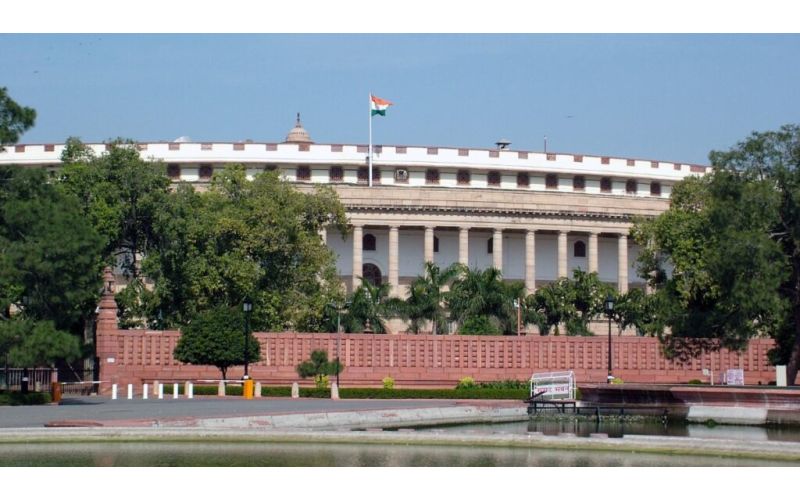
Rajya Sabha Passes J&K Reorganization Bill To Bifurcate Jammu And Kashmir Into Two Union Territories
The Rajya Sabha has passed the Jammu and Kashmir (Reorganization) Bill, 2019, which is set to bifurcate the state of Jammu and Kashmir into two Union territories – Jammu and Kashmir, which will have a legislature, and Ladakh, which will ...
Understanding Indian Constitutional Laws: A Brief Overview
Introduction: Indian Constitutional Law is the backbone of the country's legal system, laying down the framework for governance, rights, and duties of citizens, and the functioning of various institutions. Enshrined in the Constitution of India, adopted on January 26, 1950, ...
Row Over Services: Will Examine If Parliament Can Abrogate Constitutional Principles Of Governance For Delhi, Says Supreme Court
The Supreme Court has said a five-judge constitution bench will examine whether Parliament can “abrogate the constitutional principles of governance” for the Delhi government by making a law to take away its control over services. The Centre recently issued an ...

Speak With Our
Get a Appointment