
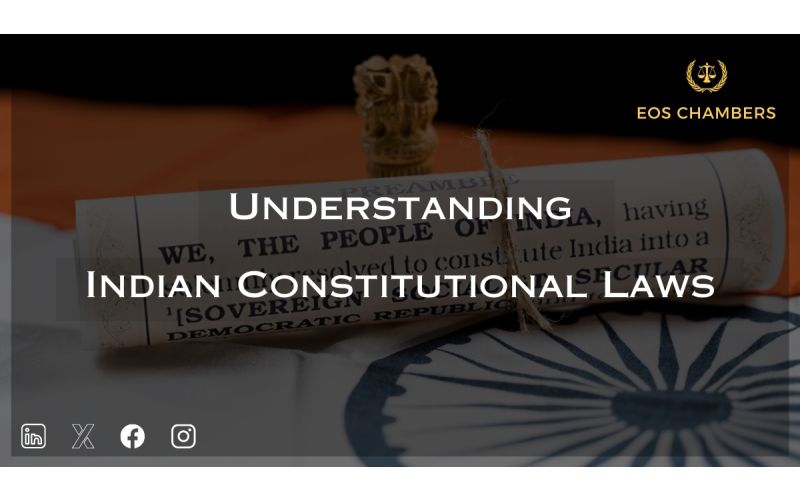
Understanding Indian Constitutional Laws: A Brief Overview
Understanding Indian Constitutional Laws: A Brief Overview
|
Introduction:
Indian Constitutional Law is the backbone of the country's legal system, laying down the framework for governance, rights, and duties of citizens, and the functioning of various institutions. Enshrined in the Constitution of India, adopted on January 26, 1950, it reflects the aspirations of the founding fathers to create a democratic and egalitarian society.
Key Features of Indian Constitutional Laws:
-
Preamble: The Preamble of the Indian Constitution sets out the ideals and objectives of the Constitution, including justice, liberty, equality, and fraternity. It serves as a guiding light for the interpretation and implementation of laws.
-
Fundamental Rights: Part III of the Constitution guarantees fundamental rights to every citizen, such as the right to equality, freedom of speech and expression, right to life and personal liberty, and right to constitutional remedies. These rights are enforceable by the courts and form the cornerstone of Indian democracy.
-
Directive Principles of State Policy: Part IV of the Constitution contains Directive Principles of State Policy, which are guidelines for the government to promote social justice, economic welfare, and other ideals. Though not enforceable by the courts, they are fundamental in the governance of the country.
-
Federal Structure: The Indian Constitution establishes a federal structure with a division of powers between the central government and the state governments. It delineates the legislative, executive, and judicial powers of the Union and the states to ensure a balance of power.
-
Independent Judiciary: The Constitution establishes an independent judiciary with the Supreme Court as the highest judicial authority. It acts as the guardian of the Constitution, ensuring its supremacy and protecting the rights of citizens through judicial review.
-
Amendment Procedure: The Constitution provides for its own amendment to adapt to changing circumstances. Amendments can be made by a special majority of both houses of Parliament, ensuring the flexibility and adaptability of the Constitution.
Conclusion:
Indian Constitutional Laws embody the principles of democracy, equality, and justice, guiding the nation towards progress and prosperity. With its robust framework and dynamic nature, it continues to evolve to meet the challenges of a changing world while upholding the values enshrined in its preamble. Understanding these laws is essential for every citizen to actively participate in the democratic process and contribute to the nation's growth and development.
Post Categories
Featured Posts








Latest Posts








Latest Posts

Judge Aspirants Get Relief; Supreme Court Sets Aside BPSC's Rejection Of Candidates For Not Producing Original Certificates
The Supreme Court on Friday (September 22) granted relief to three judicial service aspirants from Bihar whose candidatures were rejected by the Bihar Public Service Commission(BPSC) due to non-production of original certificates at the time of interview. Holding that production ...

'No right for queer couples to jointly adopt’: SC in same-sex marriage verdict
The CJI said the law didn't preclude unmarried couples from adopting.Chief Justice of India DY Chandrachud, while announcing his verdict on a clutch of petitions demanding legal status to same-sex marriages, today struck down the Central Adoption Resource Authority's (CARA) ...
UPSC CSE: No Interim Relief, Delhi High Court Asks CAT To Expeditiously Decide On Plea To Lower CSAT Cut-Off
The Delhi High Court on Wednesday asked the Central Administrative Tribunal to decide expeditiously the Plea seeking reduction in the cut off from 33% to 23% for qualifying Part II (CSAT) exam of 2023 Civil Services Examination conducted by UPSC ...

"Why Are You Being So Patriarchal?" : Supreme Court Asks Centre Over Denial Of Permanent Commission To Woman Coast Guard Officer
The Supreme Court on Monday (February 19) pulled up the Central Government over the denial of Permanent Commission for women officers in the Indian Coast Guard (ICG). The bench led by Chief Justice of India DY Chandrachud, hearing a plea of ...
Law's Outcome Depends On Who Wields The Law In Their Hands : CJI DY Chandrachud
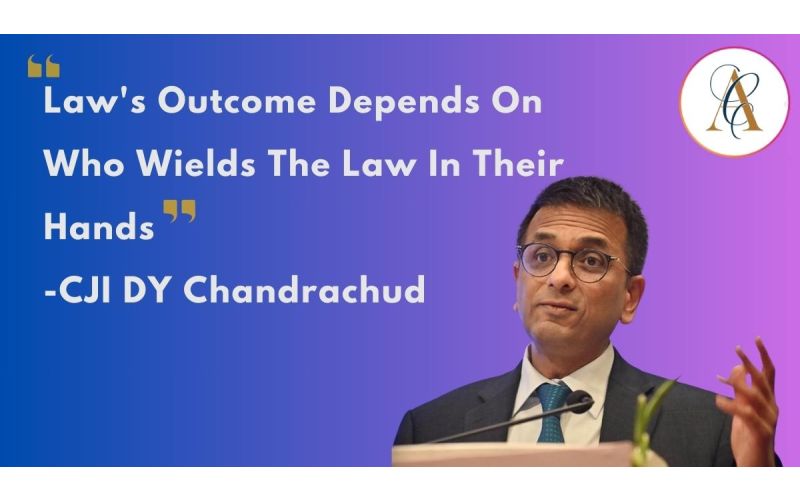
Chief Justice of India, DY Chandrachud recently spoke on how justice and the outcome of the law depends on who is wielding the law in their hands. When the law is wielded with compassion, it is capable of producing justice, ...
Grant Of Bail Can't Be Made Dependent On Surrender Of Co-Accused : Supreme Court
A Division Bench of the Supreme Court, while allowing a bail plea, held that the grant of bail to a co-accused person cannot be contingent on the surrender of another accused who is also pertinently the main accused in the ...

Speak With Our
Get a Appointment