
Grant Of Bail Can't Be Made Dependent On Surrender Of Co-Acc
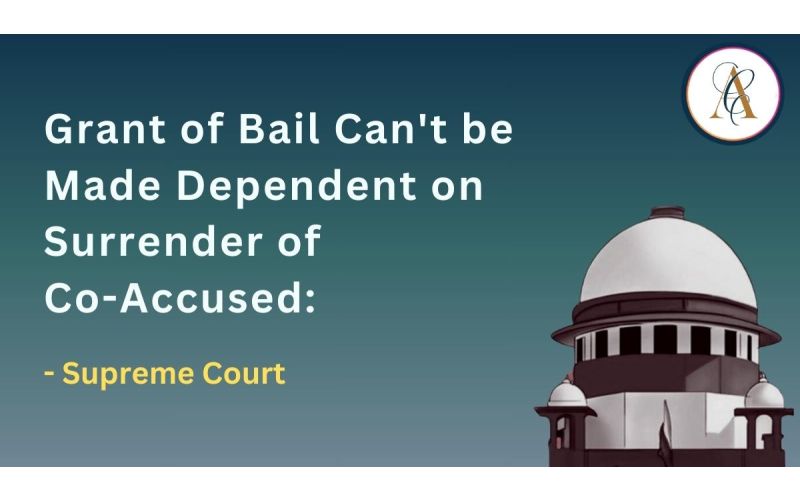
Grant Of Bail Can't Be Made Dependent On Surrender Of Co-Accused : Supreme Court
|
A Division Bench of the Supreme Court, while allowing a bail plea, held that the grant of bail to a co-accused person cannot be contingent on the surrender of another accused who is also pertinently the main accused in the case.
“In our opinion, the question of grant of bail to a co-accused person cannot made dependent upon surrender of another accused who is described as the main accused person in this case.,” the Court held.
The Bench of Justices Aniruddha Bose and Bela M. Trivedi made these observations while deciding a bail of plea of an accused in a dowry death case. It is important to note that the appellant is the brother of the husband and also an accused. It may also be noted that the husband has been absconding and the trial had begun without he being arrested.
Prior to approaching the Supreme Court, the appellant approached the Patna High Court seeking his grant of bail. The High Court, in its impugned judgment , though directed for release of the petitioner on bail however, the same was linked to the condition of surrender by the husband of the deceased before the learned trial court. The relevant portion of the order is:
I deem it fit and proper to direct for release of the petitioner on bail, immediately upon surrender by the husband of the deceased victim lady before the learned trial court, subject to such conditions as may be deemed fit and proper to be imposed by the learned court of Judicial Magistrate-1st Class, Buxar in connection with Koran Sarai P.S.Case No. 18 of 2021."
The Top Court, while allowing the bail plea, observed that imposition and subsequent adhering to the condition of surrender of the husband of the deceased/ co-accused would not be necessary for grant of bail to the appellant.
Post Categories
Featured Posts







Latest Posts








Latest Posts
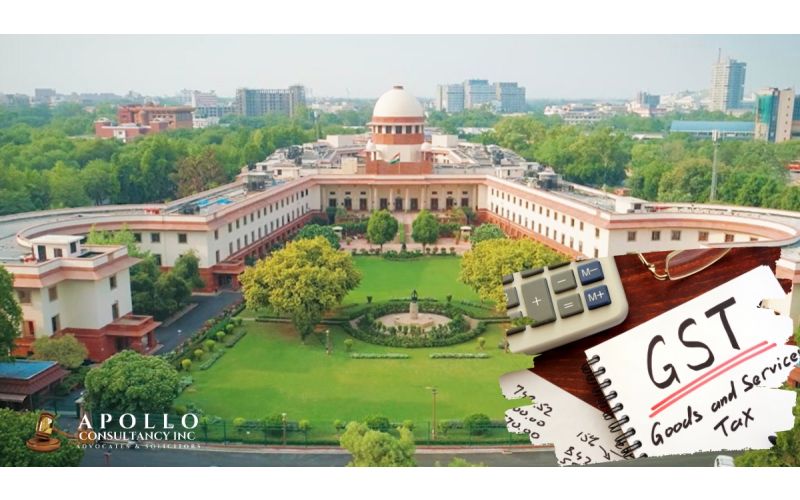
SC Ruling On User Development Fee Provides Guidance For GST, Tax On Royalty
The SC had held that UDF collected by the DIAL is in the nature of statutory levy and the same would not be taken as consideration against any services.A recent judgment by the Supreme Court (SC) on the user development fee (UDF) collected by the Delhi International Airport Limited (DIAL) ...
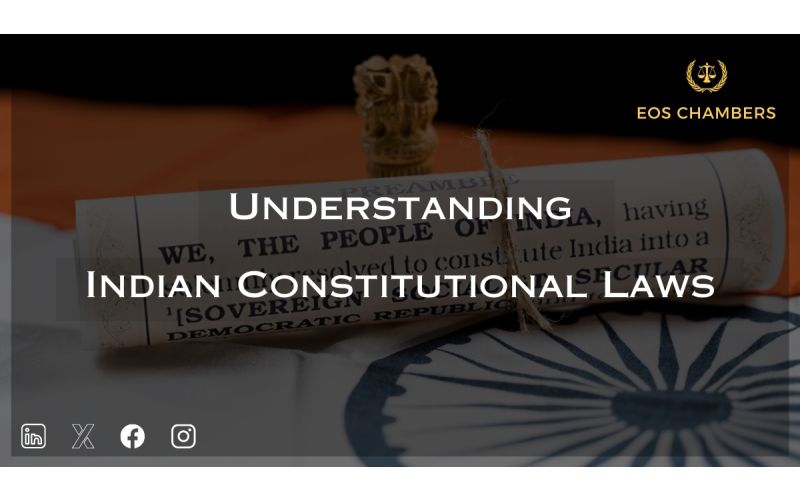
Understanding Indian Constitutional Laws: A Brief Overview
Introduction: Indian Constitutional Law is the backbone of the country's legal system, laying down the framework for governance, rights, and duties of citizens, and the functioning of various institutions. Enshrined in the Constitution of India, adopted on January 26, 1950, ...
Supreme Court To Form Panel Of Experts To Evaluate “Carrying Capacity” Of Hilly Areas
In order to determine the “carrying capacity” of overcrowded hill stations in Uttarakhand, Himachal, and other Himalayan states affected by landslides, the Supreme Court on Monday decided to form a panel of experts on environment and climate studies from government institutions. A ...

Protecting Confidentiality: A Legal Guide to Non-Disclosure Agreements (NDAs) in India
In a rapidly growing business ecosystem, safeguarding sensitive information is paramount. For Indian businesses, Non-Disclosure Agreements (NDAs) have become crucial legal tools to protect trade secrets, proprietary information, client details, and more. This article explores NDAs from an Indian legal ...

Startups and Legal Compliance: A Guide to Navigating Indian Laws
Navigating legal compliance is crucial for startups to establish a strong foundation and ensure sustainable growth. In India, understanding and adhering to applicable laws can be complex but essential. Here’s a concise guide to help startups stay compliant: 1. Incorporation ...
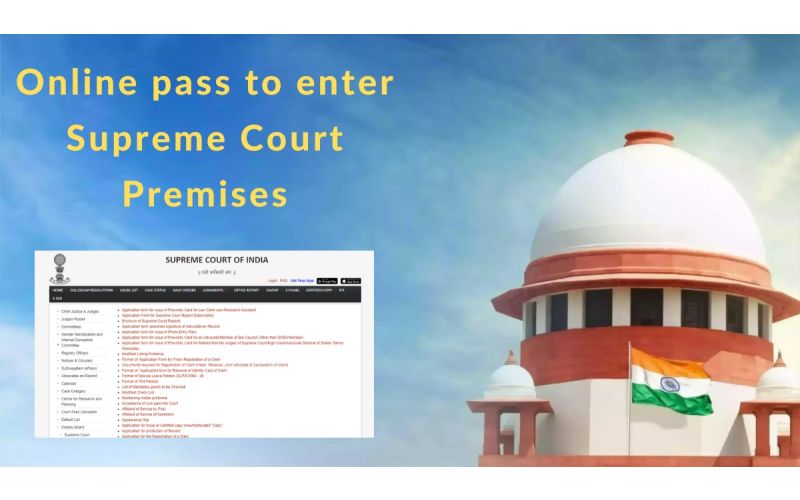
Get Online Pass To Enter Supreme Court Premises
The Supreme Court on Thursday launched ‘SuSwagatam’, a new initiative to generate entry passes online to help those who need to visit the court premises for various purposes. Chief Justice of India (CJI) D Y Chandrachud on Thursday announced the ...

Speak With Our
Get a Appointment