
Section 313 CrPC | 'Right To Remain Silent Not Be Used Again
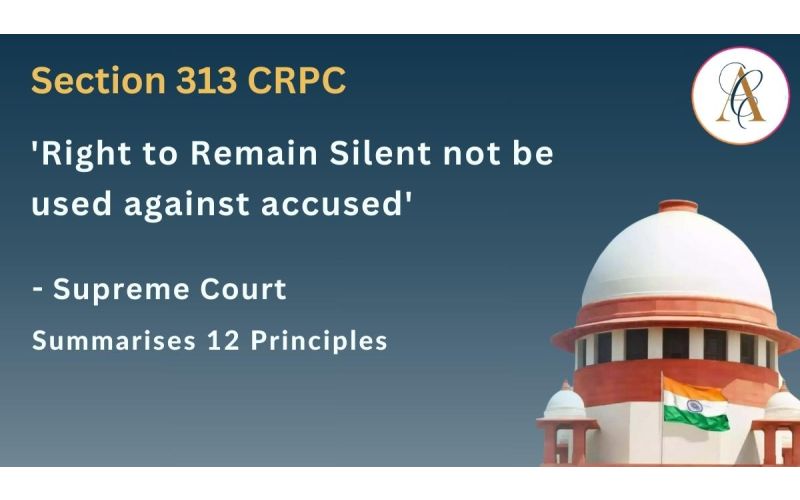
Section 313 CrPC | 'Right To Remain Silent Not Be Used Against Accused' : Supreme Court Summarises 12 Principles
|
Recently, the Supreme Court, in a noteworthy judgment, while acquitting a woman accused of killing her own child and was convicted for murder and sentenced to life imprisonment, also decided the question of what may be required of the convict in her statement under Section 313 Code of Criminal Procedure (Cr.P.C).
Citing extensive thread of precedents, the Top Court penned down the following principles.
- The object, evident from the Section itself, is to enable the accused to themselves explain any circumstances appearing in the evidence against them.
- The intent is to establish a dialogue between the Court and the accused. This process benefits the accused and aids the Court in arriving at the final verdict.
- The process enshrined is not a matter of procedural formality but is based on the cardinal principle of natural justice, i.e.,
- The ultimate test when concerned with the compliance of the Section is to enquire and ensure whether the accused got the opportunity to say his piece.
- In such a statement, the accused may or may not admit involvement or any incriminating circumstance or may even offer an alternative version of events or interpretation. The accused may not be put to prejudice by any omission or inadequate questioning.
- The right to remain silent or any answer to a question which may be false shall not be used to his detriment, being the sole reason.
- This statement cannot form the sole basis of conviction and is neither a substantive nor a substitute piece of evidence. It does not discharge but reduces the prosecution's burden of leading evidence to prove its case. They are to be used to examine the veracity of the prosecution's case.
- This statement is to be read as a whole. One part cannot be read in isolation.
- Such a statement, as not on oath, does not qualify as a piece of evidence under Section 3 of the Indian Evidence Act, 1872; however, the inculpatory aspect as may be borne from the statement may be used to lend credence to the case of the prosecution.
- The circumstances not put to the accused while rendering his statement under the Section are to be excluded from consideration as no opportunity has been afforded to him to explain them.
- The Court is obligated to put, in the form of questions, all incriminating circumstances to the accused so as to give him an opportunity to articulate his defence. The defence so articulated must be carefully scrutinized and considered.
- Non-compliance with the Section may cause prejudice to the accused and may impede the process of arriving at a fair decision.
It may be noted that, in the instant case, the case of the prosecution was that the convict (appellant) had relations with a co-villager, namely, Baiga Gond, as a result of which she conceived a child. She, upon giving birth, allegedly killed this child and threw the corpse into a dabri (small water bodypond).
In the Section 313 CrPC statement, the accused had admitted that she was pregnant. Since the accused was living alone, the trial court made further inferences from her admission of pregnancy and proceeded to hold her guilty of the murder of the child.
The Supreme Court took a critical view of the approach taken by the trial court, which was affirmed by the High Court.
In the context of Section 313 of the Code of Criminal Procedure, the Court said : "Although there is a requirement by law to disclose the aspects required to adjudicate in a criminal matter such duty cannot unreasonably and unwarrantedly step over the fundamental right of privacy."
Post Categories
Featured Posts







Latest Posts








Latest Posts
Arbitration Law Needs To Tackle A Key Concern
The arbitration law has undergone repeated amendments with only one aim — making India the hub of international arbitration. Last month, the government set up an expert panel headed by former law secretary TK Viswanathan to suggest reforms in the ...
E-Courts: The Future of Judiciary in India
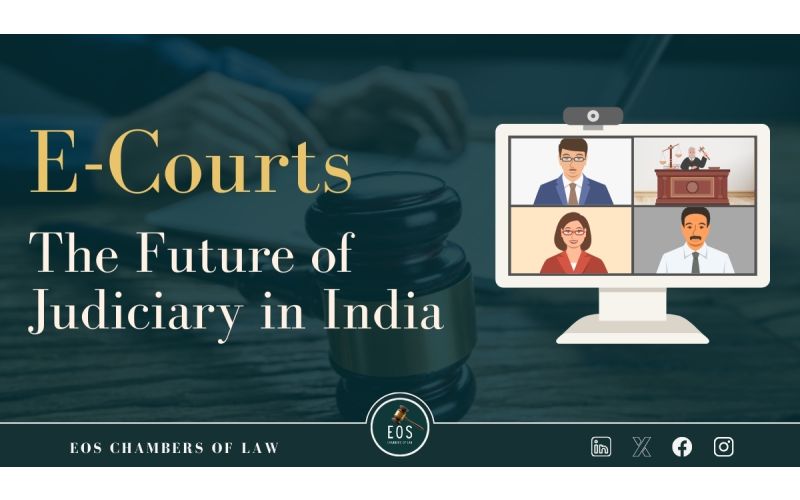
India’s judiciary is at a crossroads, with digitization and judicial reforms paving the way for increased efficiency, transparency, and accessibility. The e-Courts initiative, launched by the Indian judiciary under the National e-Governance Plan (NeGP), is a transformative step toward modernizing ...
Muzaffarnagar slapping case: SC pulls up UP govt over delay in student counselling
After perusing the state reply Friday, the bench said it reflected that the counselling process had not been done yet. “It is not reflected, it is not being done,” said Justice Oka. The Supreme Court Friday pulled up the Uttar ...

Legal Challenges in NRI Marriages
Introduction Non-Resident Indian (NRI) marriages, while often joyous, can also bring a unique set of legal challenges. These challenges stem from cross-border legal systems, differing cultural expectations, and complex family dynamics. Understanding these issues is crucial for NRIs and their ...

Permanent Establishment (PE) Risk for Foreign Companies in India – 2026 Compliance Alert
Introduction: Why PE Risk Is a Serious Compliance Issue in 2026 India continues to witness heightened scrutiny of foreign companies operating through subsidiaries, employees, consultants, and digital presence. With increased data sharing, GST intelligence, and income-tax investigations, Permanent Establishment (PE) ...

ED Summons: What to Do & What NOT to Do (Complete Legal Guide – 2026)
Receiving a summons from the Enforcement Directorate (ED) can be stressful and confusing for individuals, business owners, and company directors. However, understanding your legal rights and obligations can help you respond effectively and avoid serious consequences. This guide explains what ...

Speak With Our
Get a Appointment