
Adoption Rights for LGBTQ+ Couples: Legal Challenges in Indi
Adoption Rights for LGBTQ+ Couples: Legal Challenges in India
|
We recognize that the right to adopt is one of the most debated and sensitive issues for LGBTQ+ couples in India. Despite increasing societal awareness and progressive judicial rulings, the Indian legal framework still presents substantial challenges for LGBTQ+ individuals and couples seeking to adopt children.
Current Legal Framework:
- The Juvenile Justice (Care and Protection of Children) Act, 2015:
Under this law, only heterosexual married couples are allowed to adopt jointly. Single individuals, irrespective of sexual orientation, are permitted to adopt, but LGBTQ+ couples are not explicitly recognized. - Personal Laws Governing Adoption:
- The Hindu Adoption and Maintenance Act, 1956 (HAMA): Permits adoption but primarily caters to heterosexual married couples.
- Muslim, Christian, and Parsi personal laws generally do not provide adoption rights, relying instead on guardianship provisions under the Guardians and Wards Act, 1890.
- Central Adoption Resource Authority (CARA) Guidelines:
The CARA guidelines, which govern adoption procedures in India, remain silent on the rights of LGBTQ+ couples, creating legal ambiguity.
Key Legal Challenges:
- Absence of Recognition for Same-Sex Couples:
Indian law does not recognize same-sex marriages or partnerships, making joint adoption for LGBTQ+ couples legally impossible. - Discrimination Against LGBTQ+ Individuals:
Although single LGBTQ+ individuals can theoretically adopt, societal bias and procedural hurdles often act as barriers. - Lack of Legislative Reform:
The absence of explicit legal provisions for LGBTQ+ adoption rights perpetuates systemic exclusion and ambiguity.
Comparative Perspective:
Countries like South Africa, Canada, and the Netherlands have adopted inclusive policies allowing same-sex couples to adopt. India lags behind, requiring significant legislative and policy changes to align with global best practices.
The Way Forward:
- Legislative Advocacy:
Advocacy for amendments to the Juvenile Justice Act and CARA guidelines is crucial to include provisions for LGBTQ+ couples. - Judicial Intervention:
The judiciary could play a transformative role in addressing discrimination through landmark judgments. - Awareness and Sensitization:
Educating adoption agencies and the public on LGBTQ+ parenting could reduce stigma and foster acceptance.
Conclusion:
Adoption rights are an essential aspect of equality and dignity. For LGBTQ+ couples, the ability to create a family should not be hindered by legal barriers or societal bias. At EOS Chambers, we stand committed to supporting LGBTQ+ individuals and couples in navigating these challenges while advocating for a more inclusive legal framework.
Together, we can ensure that every child has the opportunity to grow in a loving and supportive family, irrespective of the parents' gender or sexual orientation.
Post Categories
Featured Posts








Latest Posts








Latest Posts

Anti-Money Laundering (AML) Compliance: Best Practices for Law Firms
In today's globalized economy, money laundering poses a significant threat to financial systems and institutions, including law firms. As facilitators of various financial transactions, law firms are often targeted by money launderers seeking to legitimize illicit funds. Anti-Money Laundering (AML) ...

Won’t interfere with firecracker ban in Delhi: SC
Ahead of the festive season, the Supreme Court on Wednesday said that it would not interfere with a decision of a state government if it decides to impose a complete ban on firecrackers, including green crackers, to check pollution level ...
Supreme Court Clarifies Jurisdiction of State Agencies in Corruption Cases Again
The 𝐒𝐮𝐩𝐫𝐞𝐦𝐞 𝐂𝐨𝐮𝐫𝐭 of India has recently delivered a judgment of far-reaching significance in the context of corruption prosecutions involving Central Government employees. Although the matter was argued on behalf of the petitioner and the decision ultimately went against us, ...
'Serving Personnel Can't Be Deemed To Ex-Servicemen From Future Date' : Supreme Court Rejects Army Veterans Plea For Govt Job
Serving Armed Forces officers can't be deemed to be Ex-Servicemen from a prospective date, said the Supreme Court while rejecting the claim of three appellants for appointments as Village Development Officers in the Uttar Pradesh State Service. The appellants, even ...
Deactivated Mobile Number Not Assigned To New User For 90 Days, TRAI Tells Supreme Court; WhatsApp Data Removed When Account Inactive For 45 Days
The Telecom Regulatory Authority of India (TRAI) has told the Supreme Court that once a cellular mobile telephone number is deactivated for non-usage or disconnected on the request of the subscriber, it is not allocated to a new subscriber for ...
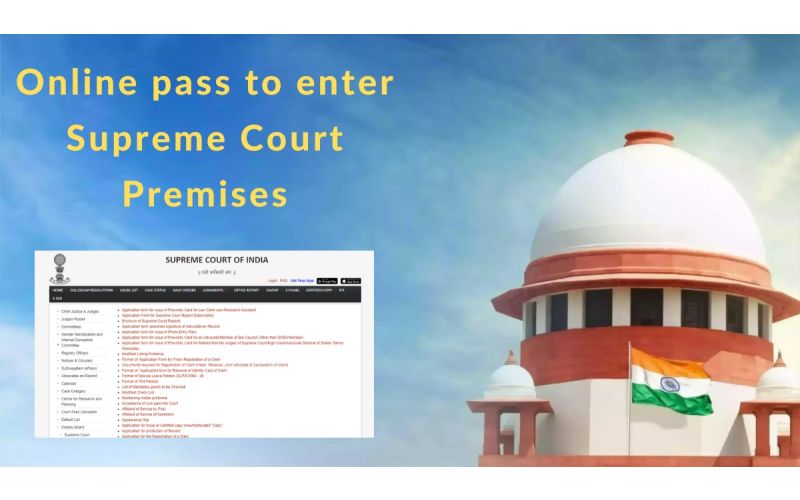
Get Online Pass To Enter Supreme Court Premises
The Supreme Court on Thursday launched ‘SuSwagatam’, a new initiative to generate entry passes online to help those who need to visit the court premises for various purposes. Chief Justice of India (CJI) D Y Chandrachud on Thursday announced the ...

Speak With Our
Get a Appointment