
AI and Big Data in Legal Case Management
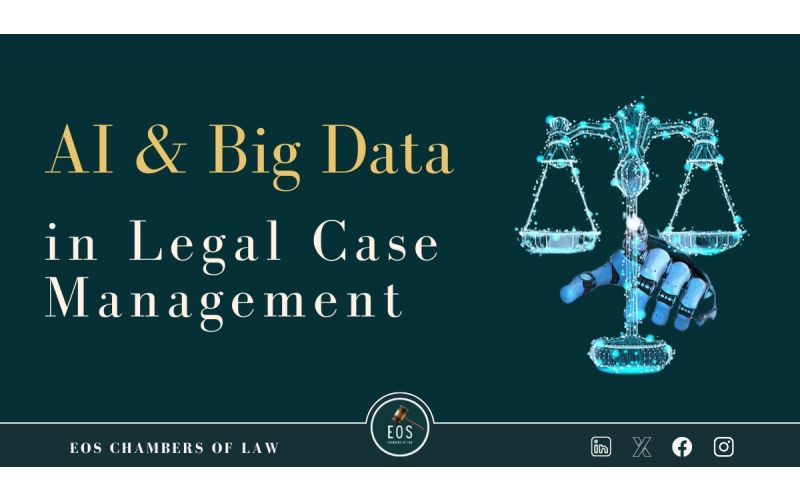
AI and Big Data in Legal Case Management
|
The integration of artificial intelligence (AI) and big data into legal case management is revolutionizing the way law firms and legal professionals operate. These technologies offer unprecedented opportunities to streamline processes, enhance decision-making, and improve client outcomes.
The Role of AI in Legal Case Management
AI technologies analyze vast amounts of data to provide actionable insights, enabling lawyers to focus on strategy rather than mundane tasks.
- Document Review and Analysis:
AI can sift through thousands of legal documents, identify relevant information, and detect patterns, significantly reducing the time spent on manual review. - Predictive Analytics:
By analyzing historical case data, AI can predict case outcomes, helping legal professionals devise more effective strategies. - Contract Management:
AI-powered tools can draft, review, and manage contracts with enhanced accuracy, ensuring compliance and identifying potential risks. - Chatbots and Virtual Assistants:
These tools handle routine client queries, appointment scheduling, and document requests, improving client satisfaction and freeing up valuable time for legal teams.
The Role of Big Data
Big data provides a wealth of information that lawyers can leverage for better case management:
- Data-Driven Decision Making:
By analyzing judicial trends, court rulings, and industry benchmarks, lawyers can make informed decisions tailored to specific cases. - Client Insights:
Big data helps firms understand client needs and behavior, allowing for personalized legal solutions. - Risk Assessment:
Identifying trends and anomalies in data sets enables firms to anticipate and mitigate legal risks effectively.
Benefits of AI and Big Data Integration
- Efficiency:
Automating repetitive tasks saves time and resources, enabling lawyers to focus on higher-value activities. - Accuracy:
AI minimizes human error in document review and legal research, ensuring better compliance and case outcomes. - Cost-Effectiveness:
Automation reduces operational costs, making legal services more affordable and accessible. - Enhanced Client Service:
Faster response times and data-driven insights improve client satisfaction and trust.
Challenges and Ethical Considerations
- Data Privacy:
Handling sensitive client data requires robust security measures to prevent breaches and ensure compliance with privacy laws. - Bias in AI:
If not carefully programmed, AI systems may perpetuate biases present in historical data. - Skill Gap:
Lawyers need training to understand and effectively use AI and big data tools. - Regulatory Concerns:
Legal professionals must navigate complex regulations governing AI usage and data analytics.
The Future of AI and Big Data in Law
- Custom AI Solutions:
As AI becomes more advanced, legal firms will increasingly use tailored AI systems for specific practice areas. - Integration with Blockchain:
Combining big data with blockchain technology could enhance transparency and security in legal processes. - Global Collaboration:
AI and big data facilitate cross-border legal practices by providing a unified platform for case management and compliance. - AI-Augmented Judges:
While controversial, AI could play a role in assisting judges with case analysis, ensuring consistency in rulings.
Conclusion
The adoption of AI and big data in legal case management is not just a trend; it’s a paradigm shift. These technologies promise to make legal services faster, smarter, and more accessible, while also raising important ethical and regulatory questions. Law firms that embrace these innovations while addressing associated challenges will be well-positioned to lead the legal industry into a more dynamic and data-driven future.
Post Categories
Featured Posts








Latest Posts








Latest Posts

Supreme Court Seeks Union's Stand Regarding Cryptocurrency
The Centre has told the Supreme Court it is yet to take a decision on a mechanism to regulate cryptocurrencies and effectively investigate related offences. A bench of justices Surya Kant and KV Viswanathan was told by Additional Solicitor General ...

Motor Accident Claims | No Right To Recovery For Insurer Merely Because Vehicle Owner Didn't Verify Driver's License : Supreme Court
The Supreme Court on Monday (30th October) held that an insurance company cannot claim that it is not liable to pay compensation in a motor vehicle accident claim just because the vehicle owner did not verify the genuineness of the ...

ADR in Real Estate & Construction Disputes | Fast-Track Legal Solutions
The real estate and construction sector in India is one of the fastest-growing industries, but it is also one of the most dispute-prone. Delays in possession, payment disputes, contractor disagreements, quality issues, and non-compliance with project timelines often lead to ...

An Exegesis On Criminal Offences: A Legal Discourse From The Pinnacle Of The Indian Judiciary
Index: Introduction Understanding Criminal Offences 2.1 Petty Offences 2.2 Cognizable Offences 2.3 Non-Cognizable Offences Consequences of Criminal Offences 3.1 Legal Consequences 3.2 Social and Personal Impact 3.3 Societal Costs Conclusion———————————— Introduction: Criminal offenses encapsulate acts that transgress established laws and regulations, warranting punitive measures imposed ...

Prashant Mishra, KV Viswanathan Take Oath As Supreme Court Judges
By India, Today News Desk: Justice Prashant Kumar Mishra and senior advocate KV Viswanathan were sworn-in as Supreme Court judges on Friday, a day after the Central government cleared the appointment of the advocates. New Union Law Minister Arjun Meghwal took to ...

NRI Divorce and Child Custody Rights in India: What You Must Know
When NRIs (Non-Resident Indians) go through a divorce involving children, legal rights around custody, visitation, and jurisdiction often become complex. Key Points: Jurisdiction Matters: If the marriage was registered in India or the couple last lived here, Indian courts can ...

Speak With Our
Get a Appointment