
An Exegesis On Criminal Offences: A Legal Discourse From The

An Exegesis On Criminal Offences: A Legal Discourse From The Pinnacle Of The Indian Judiciary
|
Index:
Introduction
Understanding Criminal Offences
2.1 Petty Offences
2.2 Cognizable Offences
2.3 Non-Cognizable Offences
Consequences of Criminal Offences
3.1 Legal Consequences
3.2 Social and Personal Impact
3.3 Societal Costs
Conclusion
————————————
- Introduction:
Criminal offenses encapsulate acts that transgress established laws and regulations, warranting punitive measures imposed by the Indian legal system. The repercussions of criminal conduct are profound, impacting individuals, communities, and the societal fabric. This exposition aims to provide a comprehensive overview of criminal offenses, their classification, and the potential consequences as per the Indian judicial framework.
- Understanding Criminal Offences:
Criminal offences encompass a broad spectrum of illicit activities, ranging from minor infractions to grave felonies. They are primarily classified into three key categories as per the Indian legal milieu: petty offences, cognizable offen es, and non-cognizable offenses.
2.1 Petty Offences:
Petty offences refer to minor transgressions that are typically punishable by nominal fines or community service. Examples include traffic violations, littering, or public disturbances. While relatively less severe, these offences attract penalties and may result in the accrual of demerit points on a driver’s record or other associated consequences. The objective behind penalizing petty offences is to ensure public order and maintain discipline.
2.2 Cognizable Offences:
Cognizable offences represent more serious transgressions, necessitating immediate police intervention, and investigation without a warrant. They entail grave criminal acts such as theft, assault, or drug abuse. Cognizable offences carry substantial penalties, including imprisonment, fines, or both, as prescribed by the relevant provisions of the Indian Penal Code (IPC). These offences pose a significant threat to public safety, and prompt action by law enforcement agencies is crucial for maintaining law and order.
2.3 Non-Cognizable Offences:
Non-cognizable offences are less serious in nature, requiring a formal complaint to initiate the investigation process. These offences encompass actions like defamation, forgery, or breach of trust. Punishments for non-cognizable offences include fines or imprisonment, as prescribed by the IPC or other relevant statutes. Non-cognizable offences primarily involve private disputes, and the initiation of legal action is dependent on the aggrieved party’s complaint.
- Consequences of Criminal Offences:
The consequences of criminal offences extend beyond the immediate penalties imposed by the Indian legal system, exerting lasting effects on individuals, families, and the wider society.
3.1 Legal Consequences:
Criminal offences carry significant legal ramifications. Convictions may result in custodial sentences, probation, mandatory counseling, or restitution orders. The severity of the punishment depends on the nature and gravity of the offence. Additionally, individuals with criminal records may face hurdles in securing employment, obtaining bail, or availing themselves of certain governmental benefits. Legal consequences not only serve as a deterrent to potential offenders but also seek to rehabilitate and reintegrate offenders into society.
3.2 Social and Personal Impact:
Criminal offences bear a pronounced social stigma, impeding personal relationships and societal integration. The erosion of trust, reputation, and social standing necessitates arduous efforts at rehabilitation. Furthermore, individuals engaged in criminal conduct often experience adverse psychological and emotional consequences, including guilt, shame, and ostracization. Rebuilding one’s life after committing a criminal offence requires not only legal assistance but also support from family, friends, and social welfare organizations to facilitate the reintegration process.
3.3 Societal Costs:
Criminal offences impose substantial financial burdens on society. These encompass expenses related to law enforcement, judicial proceedings, incarceration, and rehabilitation programs. Moreover, communities afflicted by crime may endure economic downturns, diminished property values, and a deteriorating quality of life. The cost of crime prevention, victim support services, and the maintenance of correctional facilities weighs heavily on the state’s resources. Addressing the societal costs of criminal offences necessitates a multifaceted approach involving investment in education, employment opportunities, and community development to prevent crime and promote social well-being.
Conclusion:
Criminal offences span a wide array of illicit activities, contravening established laws within the Indian judicial framework. From petty offences to grave felonies, these transgressions exert far-reaching consequences for individuals and society at large. Familiarity with the diverse offence classifications and their attendant ramifications assumes paramount importance in upholding the tenets of justice. By fostering awareness, implementing preventive measures, and embracing rehabilitation, we can strive towards a safer and more harmonious society. The collective efforts of the legal system, community organizations, and individuals play a pivotal role in curbing criminal conduct and promoting the rule of law.
Post Categories
Featured Posts







Latest Posts








Latest Posts

KnowTheLaw | Can NRIs Buy Agricultural Land in India?
🌾 No — NRIs are not allowed to purchase agricultural land, plantation property, or farmhouses in India, as per RBI guidelines. However, they can inherit or receive such land as a gift from a resident Indian. 📌 Important: Violating this ...
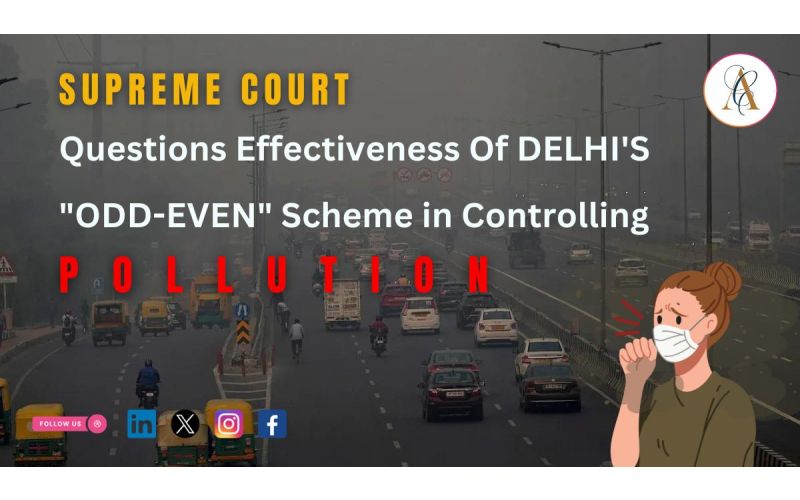
Supreme Court Questions Effectiveness Of Delhi's 'Odd-Even' Scheme In Controlling Pollution
The Supreme Court on Tuesday (November 7) questioned the effectiveness of the Delhi Government's "odd-even" scheme in controlling air pollution, while terming it as “optics”. Under this scheme, vehicles with license plate numbers ending in an even digit are allowed ...
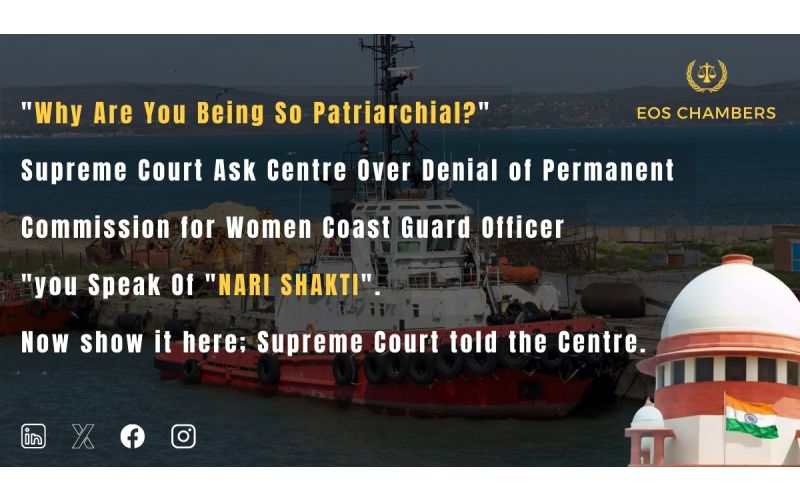
"Why Are You Being So Patriarchal?" : Supreme Court Asks Centre Over Denial Of Permanent Commission To Woman Coast Guard Officer
The Supreme Court on Monday (February 19) pulled up the Central Government over the denial of Permanent Commission for women officers in the Indian Coast Guard (ICG). The bench led by Chief Justice of India DY Chandrachud, hearing a plea of ...

🏠 𝐋𝐞𝐠𝐚𝐥 𝐂𝐡𝐞𝐜𝐤𝐥𝐢𝐬𝐭 𝐁𝐞𝐟𝐨𝐫𝐞 𝐈𝐧𝐯𝐞𝐬𝐭𝐢𝐧𝐠 𝐢𝐧 𝐈𝐧𝐝𝐢𝐚𝐧 𝐑𝐞𝐚𝐥 𝐄𝐬𝐭𝐚𝐭𝐞 (2025 𝐄𝐝𝐢𝐭𝐢𝐨𝐧)
𝐍𝐑𝐈 𝐨𝐫 𝐇𝐍𝐈? 𝐃𝐨𝐧’𝐭 𝐈𝐧𝐯𝐞𝐬𝐭 𝐖𝐢𝐭𝐡𝐨𝐮𝐭 𝐓𝐡𝐞𝐬𝐞 7 𝐋𝐞𝐠𝐚𝐥 𝐂𝐡𝐞𝐜𝐤𝐬! Real estate remains one of the most trusted investment avenues for 𝐍𝐑𝐈𝐬 𝐚𝐧𝐝 𝐇𝐍𝐈𝐬 𝐢𝐧 𝐈𝐧𝐝𝐢𝐚. But with rising frauds, title disputes, and compliance issues—a beautiful property can become a ...

Parliament Passes Forest (Conservation) Amendment Bill, 2023
After opposition walked out over their demands for discussion on Manipur Violence, the Rajya Sabha passed the contentious Forest (Conservation) Amendment Bill, 2023 today. It aims to amend certain provisions under the Forest (Conservation) Act, 1980, to extend and exempt ...
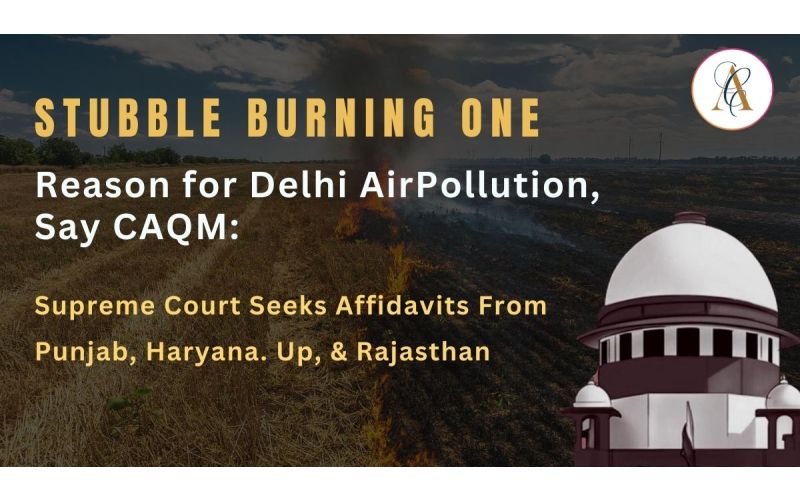
Stubble Burning One Reason For Delhi Air Pollution, Says CAQM; Supreme Court Seeks Affidavits From Punjab, Haryana, UP, Rajasthan
The Supreme Court on Tuesday (October 31) asked the Governments of Punjab, Haryana, Uttar Pradesh, Rajasthan and Delhi to file affidavits setting forth the steps they have taken to control air pollution including the measures to curb crop burning. This ...

Speak With Our
Get a Appointment