
Supreme Court: BCI Rules For Candidate Seeking Enrolment As
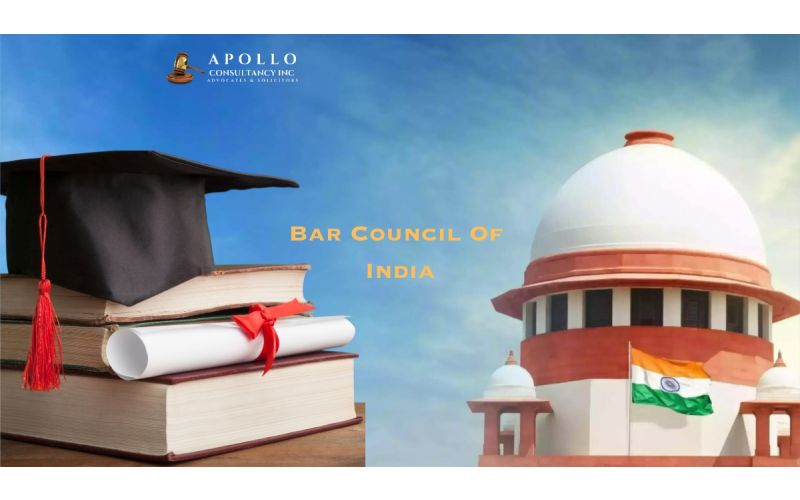
Supreme Court: BCI Rules For Candidate Seeking Enrolment As Advocate To Have Completed Law Course From Recognized College Are Valid
|
The Supreme Court Friday held as valid the rules framed by the Bar Council of India requiring candidates seeking enrolment as an advocate to have completed their law course from a college recognized by the top Bar body. A vacation bench of Justices Vikram Nath and Sanjay Kumar set aside an order of the Orissa High Court by which it had said the BCI cannot frame rules and add any condition for enrolment in addition to what is prescribed under section 24 of the Advocates Act of 1961.
The high court had directed the enrolment of Rabi Sahu as an advocate despite the fact that he got his law degree from a college that was not recognized or approved by BCI.
“The rule framed by BCI requiring a candidate for enrolment as an Advocate to have completed his law course from a college recognized/ approved by BCI cannot be said to be invalid, as was held in the impugned order.
“We, therefore, have no hesitation in holding that the division bench was not justified in directing the enrolment of respondent No. 1 (Rabi Sahu) as an Advocate, despite the fact that he secured his law degree from a college which was not recognized or approved by BCI. The appeal is accordingly allowed, setting aside the order dated September 21, 2012, passed by the Orissa High Court…,” the apex court said.
Analyzing the high court verdict, the bench said the HC had relied upon the 1999 judgment in the case of V Sudheer versus the Bar Council of India and said on February 10 this year, a constitution bench of the top court had opined that the 1999 verdict was not a good law.
The court said the constitution bench held that the BCI’s role prior to enrolment “cannot be ousted” , and the finding of V Sudheer verdict that it was not one of the statutory functions of BCI to frame rules imposing pre-enrolment conditions, was erroneous.
“It was categorically held that Section 49 read with Section 24(3)(d) of the Act of 1961 vested BCI with the power to prescribe the norms for entitlement to be enrolled as an Advocate and in consequence, the interdict placed by the decision in V Sudeer on the power of BCI could not be sustained. The Constitution Bench, accordingly, held that V. Sudeer did not lay down the correct position of law,” the bench said.
The vacation bench passed the verdict on an appeal of the Bar Council of India against the high court order dated September 21, 2012.
The top court had stayed the operation of the high court’s order on January 28, 2013 and issued notices to Sahu and the Orissa State Bar Council.
Both Sahu and the State Bar Council did not appear before the top court in the matter.
The bench noted that Sahu secured his law degree from Vivekananda Law College at Angul in Odisha in the year 2009 but this college was not recognised by the BCI.
It also noted that by a letter dated January 5, 2002, the BCI had directed the college to not to admit students in law courses making it clear that students so admitted will not be eligible for enrolment as as advocates.
The Bar Council of India had also informed the Orissa State Bar Council on February 28, 2011 about non-recognition of the college.
“As a corollary, the Orissa State Bar Council rejected the application of respondent No. 1 (Sahu) for enrolment as an Advocate, vide letter dated May 4, 2011,” the bench noted. Aggrieved by the decision of the state bar council, Sahu had moved the high court which ruled in his favour.
Post Categories
Featured Posts




Latest Posts







Latest Posts
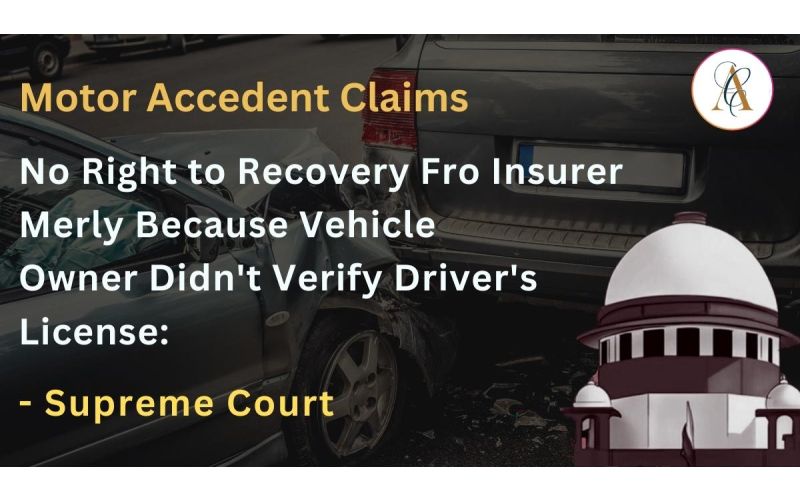
Motor Accident Claims | No Right To Recovery For Insurer Merely Because Vehicle Owner Didn't Verify Driver's License : Supreme Court
The Supreme Court on Monday (30th October) held that an insurance company cannot claim that it is not liable to pay compensation in a motor vehicle accident claim just because the vehicle owner did not verify the genuineness of the ...
An In-Depth Look at Environmental and Sustainability Law
In today's rapidly changing world, environmental and sustainability law has become a cornerstone of global legal practices. With increasing awareness of climate change, resource depletion, and environmental degradation, these laws are essential for promoting sustainable development and protecting our planet ...
DBS Bank Directors Can’t Be Prosecuted For Acts Of Lakshmi Vilas Bank Before Amalgamation : Supreme Court Quashes Criminal Case
The Supreme Court today ruled that DBS Bank and its directors, who were appointed after the amalgamation with Lakshmi Vilas Bank(LVB) and had their appointments approved by the Reserve Bank of India (RBI), cannot be held criminally liable for actions ...

Protecting Your Rights in Family Law Matters: Legal Solutions for NRIs ⚖️
Navigating family law matters can be especially challenging for Non-Resident Indians (NRIs) who may face unique legal complexities. Whether dealing with divorce, child custody, or property disputes, understanding your rights and available legal solutions is crucial. Here are some key ...
Be Vigilant Before Invoking Stringent Laws Like SC-ST Act : Supreme Court ‘Reminds’ Police Officers
In a recent case, the Supreme Court reminded police officers of their duty to be vigilant before invoking provisions of stringent laws such as the SC-ST (Prevention of Atrocities) Act, stating that officers must be satisfied that the provisions apply ...
AI & the Judiciary: Boundaries and Risks
🧠 Introduction: A New Era for Justice Artificial Intelligence (AI) has rapidly entered almost every professional domain — and the legal world is no exception. From predictive analytics to legal research automation, AI is revolutionizing how lawyers, judges, and courts ...

Speak With Our
Get a Appointment