Petition Against IIT Eligibility Criteria Of 75% In Class 12
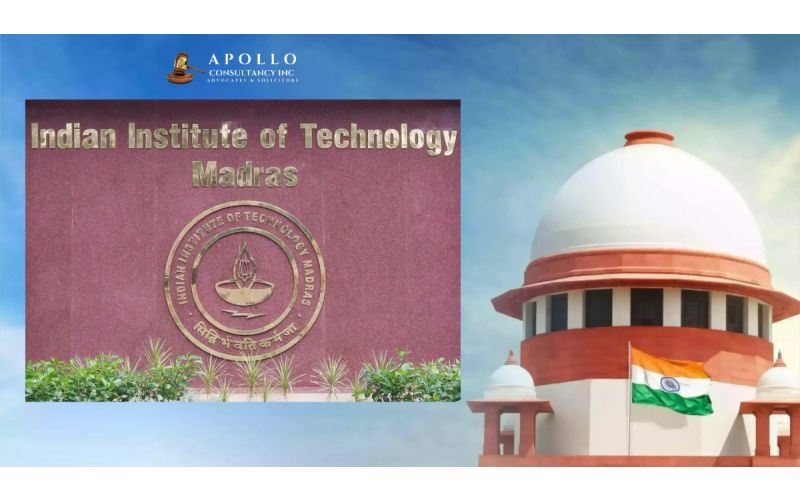
Petition Against IIT Eligibility Criteria Of 75% In Class 12 Dismissed
|
A vacation bench of Justices Sudhanshu Dhulia and K V Vishwanathan said this prerequisite existed earlier as well and it was not inclined to intervene in the matter.
New Delhi:
The Supreme Court on Monday dismissed a plea challenging the eligibility criterion of 75 percent score in the higher secondary examination for admission to the Indian Institutes of Technology (IITs).
A vacation bench of Justices Sudhanshu Dhulia and K V Vishwanathan said this prerequisite existed earlier as well and it was not inclined to intervene in the matter.
The Supreme Court said these are education matters and it has to defer the issue to experts.
“This condition was always there, why should we interfere? This is not a matter we want to get into,” the bench said.
The top court was hearing a plea filed by Chandan Kumar and others against the eligibility criterion of 75 percent marks in Class 12 board exams for admission to IITs.
The counsel appearing for the petitioners contended the students were given a waiver during the Covid-19 pandemic and the same students now have greater chances to clear the examination for admission to the prestigious engineering institutes.
“They have scored more than 98 percent in Joint Entrance Examination, JEE (Main). These are meritorious students. Kindly allow them,” the counsel said.
The lawyer submitted that the applicant has scored 92 percentile in JEE Mains and is eligible to appear in JEE Advance. However, she will not get admission even if she qualifies as her board exam score is less than 75 percent.
According to the Joint Entrance Examination (JEE) Advanced brochure released this year, candidates need to have secured at least 75 percent in Class 12 board exams.
Source
Post Categories
Featured Posts



Latest Posts







Latest Posts
Dowry Death Case | Supreme Court Surprised At HC Using Same Dying Declaration To Convict Husband While Disbelieving It For Father-in-Law
The Supreme Court, while acquitting a convict in a dowry death case, emphasized the critical importance of ensuring that a dying declaration is trustworthy and reliable, and inspires confidence when it is considered the sole basis for a criminal conviction. ...
Retired Employees Can’t Claim Benefit Of Subsequent Govt Decision To Increase Retirement Age : Supreme Court
The Supreme Court has dismissed a petition filed by a group of teachers in Homeopathic Medical Colleges in Kerala seeking increase of their retirement age from 55 years to 60 years at par with the teachers of other Medical Colleges.The ...
Repatriation of Funds: Guidelines for NRIs
Navigating the repatriation of funds as a Non-Resident Indian (NRI) can be complex, but understanding the guidelines can simplify the process and ensure compliance with Indian regulations. Here's a comprehensive overview to help NRIs manage their finances effectively. 1️⃣ ...
Section 313 CrPC | 'Right To Remain Silent Not Be Used Against Accused' : Supreme Court Summarises 12 Principles
Recently, the Supreme Court, in a noteworthy judgment, while acquitting a woman accused of killing her own child and was convicted for murder and sentenced to life imprisonment, also decided the question of what may be required of the convict ...
NRIs and Taxation in India: Legal Tips for Compliance and Avoiding Disputes
Navigating the tax landscape in India can be challenging for Non-Resident Indians (NRIs). Understanding your tax obligations is crucial to avoid disputes and penalties. Here are some essential legal tips to help NRIs ensure compliance and protect their financial interests: ...
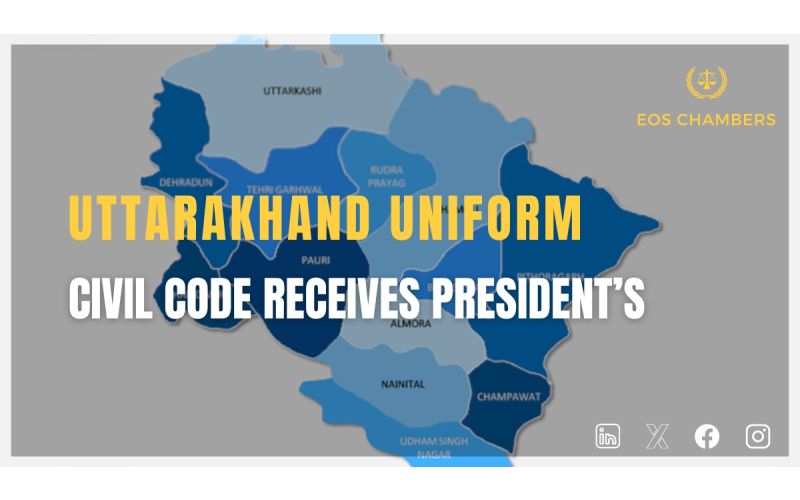
Uttarakhand Uniform Civil Code Receives President's Approval
In a crucial development, the Uttarakhand Uniform Civil Code (UCC) Bill, 2024 has been granted assent by President of India Droupadi Murmu. It may be recalled that in 2022, a committee was formed by Pushkar Singh Dhami-led Uttarakhand Government to ...

Speak With Our
Get a Appointment