Supreme Court Refuses To Interfere With HC Order Allowing De
Supreme Court Refuses To Interfere With HC Order Allowing Delhi University To Use CLAT Score For 5 Yr LLB Admissions In 2023-24
|
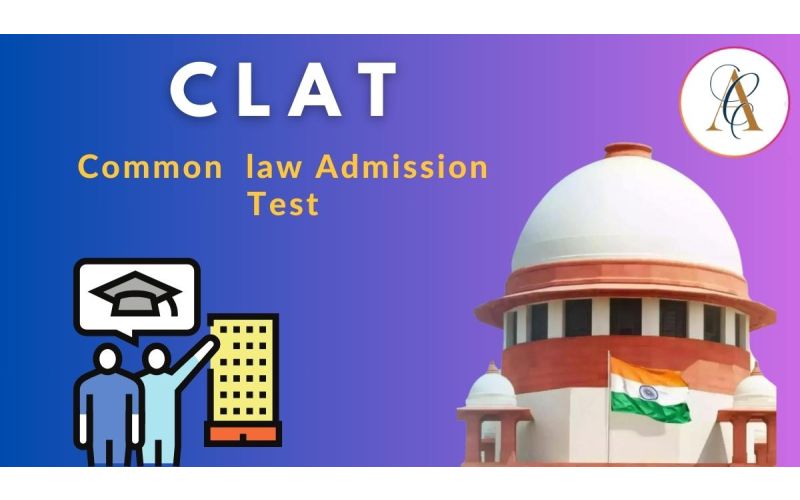
The Supreme Court on Monday(September 25) refused to interfere with the interim order passed by the Delhi High Court allowing the University of Delhi to admit students in the 5 year LL.B course of its Faculty of Law on the basis of the Common Law Admission Test (CLAT).
Noting that the classes have already commenced, a bench led by Chief Justice of India DY Chandrachud dismissed the special leave petition filed by a student, who demanded that the admission should be on the basis of the Common University Entrance Test (CUET) held by the University for other courses. CLAT is conducted by the Consortium of National Law Universities.
"This is an interlocutory order, we cannot interfere. You can argue in the High court. HC will consider it for the next year. For this year, HC thought let CLAT reign", CJI said.
On September 18, a division bench of Chief Justice Satish Chandra Sharma and Justice Sanjeev Narula passed the interim order permitting the Delhi University to offer admissions in its newly introduced five-year integrated law courses on the basis of CLAT-UG 2023 score, only for the current academic year. The court was hearing a PIL challenging Delhi University’s decision to offer the said admissions solely on the basis of CLAT-UG 2023 score, instead of CUET.
The bench observed that the matter requires consideration and listed it for hearing for a broader question i.e. whether CUET should be mandatory for admissions in all Central Universities or if such varsities are at a liberty to admit students through other examinations conducted by other specialized agencies.
“However, for the present academic year 2023-24, as classes have already started, by way of interim relief, DU is permitted to admit students to its Five Year Integrated Law Course based on CLAT UG 2023,” the High Court ordered.
Post Categories
Featured Posts


Latest Posts








Latest Posts
Supreme Court To Form Panel Of Experts To Evaluate “Carrying Capacity” Of Hilly Areas
In order to determine the “carrying capacity” of overcrowded hill stations in Uttarakhand, Himachal, and other Himalayan states affected by landslides, the Supreme Court on Monday decided to form a panel of experts on environment and climate studies from government institutions. A ...
Cheque Bounce Case Can Be Quashed U/S 482 Only If Amount Is Patently Non-Recoverable; Whether Debt Time-Barred Or Not Is A Question Of Evidence : SC
The Supreme Court observed that the question whether a cheque was issued towards a time barred debt is to be decided on evidence. “It is only in cases wherein an amount which is out and out non-recoverable, towards which a ...
No Law Gives Right To Husband To Beat & Torture His Wife: Delhi High Court Grants Divorce To Woman On Ground Of Cruelty And Desertion
Synopsis The court was hearing an appeal by a woman challenging the decision of the trial court, whereby it has dismissed her petition seeking divorce from the man on the ground of cruelty and desertion While granting divorce to a woman ...
Documents Can Be Produced During Cross-Examination In Civil Trial To Confront Party To Suit Or Witness : Supreme Court
In a notable judgment, the Supreme Court has held that a document can produced during cross-examination in a civil trial to confront a party to the suit or a witness. The Court also held that there is no distinction between ...

Builder–Buyer Disputes in India: Legal Remedies Beyond Court Litigation
Builder–buyer disputes have become one of the most common legal issues in India’s real estate sector. Delays in possession, unilateral changes in project plans, poor construction quality, refund refusals, and misleading commitments have affected thousands of home buyers across the ...
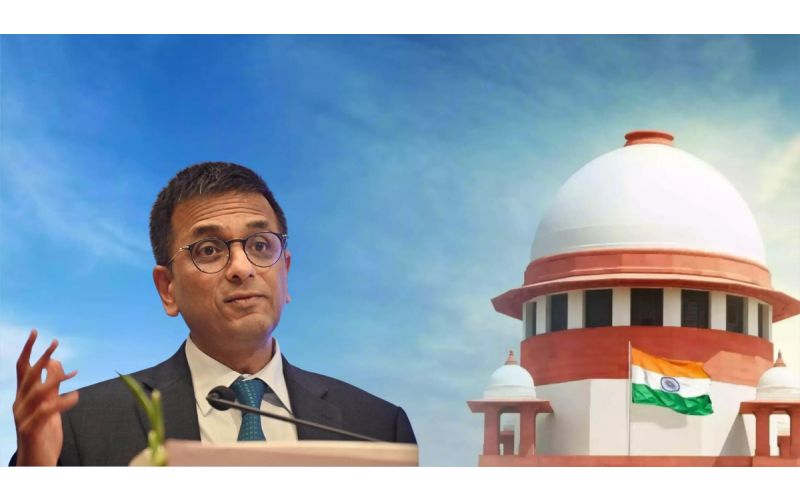
CJI DY Chandrachud Cautions About Artificial Intelligence; Says It Can Make Biased Decisions Based On Societal Prejudices
Chief Justice of India D Y Chandrachudrecently spoke on how no technology is neutral and how it can reflect human values when deployed in the real world. The CJI spoke on how one must ponder the human and societal values ...
Speak With Our
Get a Appointment