
BREAKING| Supreme Court Issues Fresh Guidelines For Senior D
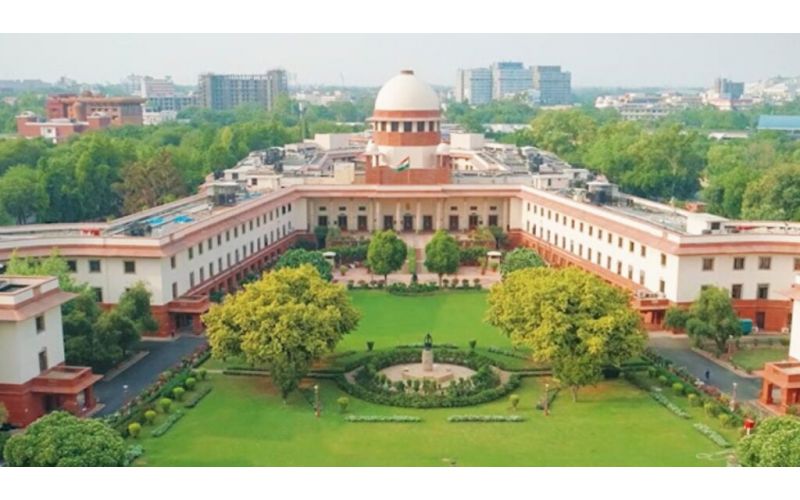
BREAKING| Supreme Court Issues Fresh Guidelines For Senior Designation; Previous Applicants Required To Update Or Submit Fresh Applications
|
The Supreme Court has issued fresh guidelines for the designation of senior advocates following the May 12 judgment in Indira Jaising vs Supreme Court which modified the criteria for senior designation.
The Court has directed that Advocates-on-Record/Advocates who had applied in response to Notice/s dated 25 February 2022 and 7 May, 2022, for conferment of designation as Senior Advocate have to either :
(i) to update their previous applications pending consideration of the Permanent Committee by furnishing additional information/data in the newly prescribed format.
(ii) to substitute their applications by submitting fresh applications in the new prescribed format, or.
(iii) to withdraw their applications by Monday, 07 August 2023 without, in any manner, affecting their entitlement to apply for designation to any High Court or to the Supreme Court, as and when application would be invited in future.
The Court has also invited fresh applications from former Chief Justices and Judges of High Courts who are desirous of being considered for senior designation.
The Senior Designations will be dealt with by a committee comprising :
a) Chief Justice of India : Chairperson.
(b) Two senior-most Judges of the Supreme Court of India : Members.
( c) Attorney General for India : Member
( d) A member of the Bar, nominated by the Chairperson and Members, referred to in (a) to ( c) above : Member.
The names shortlisted by the Committee will be placed before the Full Court. There shall be no voting by secret ballot save in an exceptional situation, for reasons to be recorded. In the Indira Jaising judgment, the Court had ordered that secret voting should be an exception.
Who are eligible to apply?
(i) At least
(a) ten years’ standing as an Advocate; or
(b) ten years’ combined standing as an Advocate and as a District and Sessions Judge or as a Judicial Member of any Tribunal in India whose qualification for eligibility for such appointment is not less than that prescribed for appointment as a District Judge.
(ii) Practice mainly in the Supreme Court.
Note: Applicant-advocates having domain expertise of practising before specialized Tribunals may be given concession with regard to the extent of appearances in the Supreme Court.
(iii) Attainment of the age of 45 years, unless the age limit is relaxed by the Committee, or the name has been recommended by the Chief Justice of India or a Judge of the Supreme Court.
Criteria
In the Indira Jaising judgment, the Supreme Court had reduced the marks awarded for criteria like publications and also included aspects like teaching assignments or guest lectures. The points for notable reported/unreported judgments and pro-bono work has been increased by 10 to make it 50(earlier it was 40).
The criteria is now :
1 Number of years of practice of the applicant-Advocate from 20 the date of enrolment – 20.
( 10 points for 10 years of practice and 1 point each for every additional year of practice, subject to a maximum of 20 points).
2 Judgments reported and unreported ( excluding orders that 50 do not lay down any principle of law); pro bono work done by the Advocate; domain expertise (such as constitutional law, Inter-State Water Disputes, Criminal law, Arbitration law, Corporate law, Family law, Human Rights, Public Interest Litigation, International law, law relating to women) of the applicant-Advocate. – 50.
3 Publication of academic articles, experience of teaching assignments in the field of law, guest lectures delivered in law schools and professional institutions connected with law – 5
4 The test of personality and suitability on the basis of interview for a holistic assessment of the applicant – 25
Applications to be invited at least once a year
The Secretariat of the Committee will initiate the process for designation of Senior Advocate at least once every year by inviting applications from Advocates-on-Record/ Advocates for designation as Senior Advocates.
The Secretariat will publish the proposals received for designation on the official website of the Supreme Court and invite suggestions/views of other stakeholders on the proposals for designation.
Post Categories
Featured Posts




Latest Posts








Latest Posts

Adoption Rights for LGBTQ+ Couples: Legal Challenges in India
We recognize that the right to adopt is one of the most debated and sensitive issues for LGBTQ+ couples in India. Despite increasing societal awareness and progressive judicial rulings, the Indian legal framework still presents substantial challenges for LGBTQ+ individuals ...

Protecting Confidentiality: A Legal Guide to Non-Disclosure Agreements (NDAs) in India
In a rapidly growing business ecosystem, safeguarding sensitive information is paramount. For Indian businesses, Non-Disclosure Agreements (NDAs) have become crucial legal tools to protect trade secrets, proprietary information, client details, and more. This article explores NDAs from an Indian legal ...
Inheritance and Succession Laws for NRIs
📢 Inheritance and Succession Laws for NRIs Understanding inheritance and succession laws is crucial for Non-Resident Indians (NRIs) to manage their assets and ensure smooth transfer to their heirs. Here's a concise guide to these laws for NRIs, including key ...
Get Online Pass To Enter Supreme Court Premises
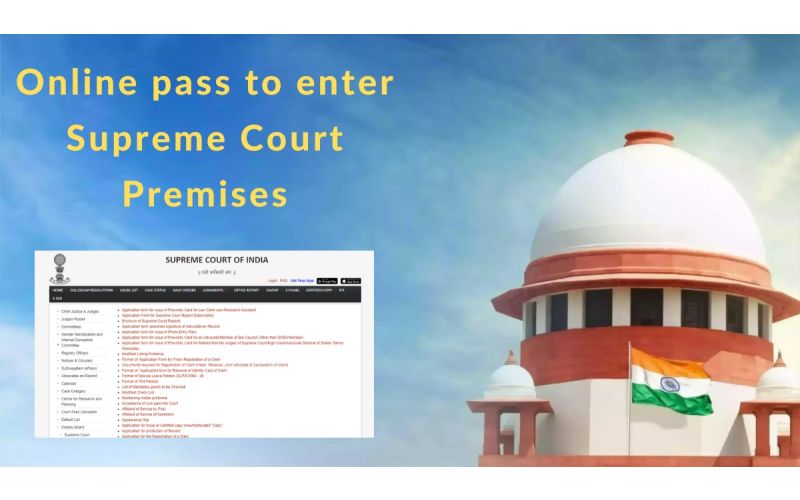
The Supreme Court on Thursday launched ‘SuSwagatam’, a new initiative to generate entry passes online to help those who need to visit the court premises for various purposes. Chief Justice of India (CJI) D Y Chandrachud on Thursday announced the ...

Builder–Buyer Disputes in India: Legal Remedies Beyond Court Litigation
Builder–buyer disputes have become one of the most common legal issues in India’s real estate sector. Delays in possession, unilateral changes in project plans, poor construction quality, refund refusals, and misleading commitments have affected thousands of home buyers across the ...
E-Courts: The Future of Judiciary in India
India’s judiciary is at a crossroads, with digitization and judicial reforms paving the way for increased efficiency, transparency, and accessibility. The e-Courts initiative, launched by the Indian judiciary under the National e-Governance Plan (NeGP), is a transformative step toward modernizing ...

Speak With Our
Get a Appointment